Books › The theory of moral sentiments
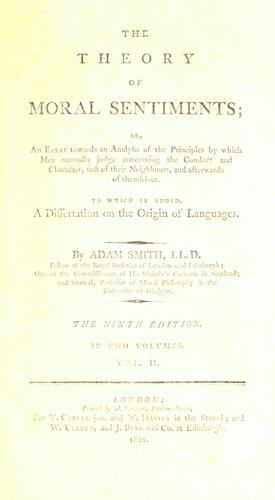
The theory of moral sentiments
896 pages
A foundational exploration of how human sympathy and the impartial spectator guide our moral compass.
What it feels like
Reading this foundational treatise feels like stepping into a measured, intellectual dialogue about the very fabric of human society. The pace is steady and contemplative, demanding a reader's full attention as it unpacks the complex interplay between our natural self-interest and our instinctive capacity for sympathy. The mood is deeply analytical yet surprisingly warm when discussing how we share in the joys and pains of our fellows. Its prose is formal and reasoned, characteristic of early philosophical works, carefully constructing the concept of the impartial spectator. This is a book for those who delight in historical ethics and moral philosophy, offering a cerebral but ultimately uplifting view of how shared emotions and self-command make virtue possible.
- Mood
- contemplative
- intellectual
- measured
- Tone
- philosophical
- analytical
- earnest
- didactic
- Pace
- steady
- Themes
- the nature of sympathy · moral judgment · self-interest and virtue · the impartial spectator · social cohesion
- The writing
- Formal, reasoned, and deeply analytical, characteristic of eighteenth-century philosophical inquiry.
- The arc
- A cerebral journey from understanding individual self-interest to recognizing the profound, binding power of human sympathy.
- Who it's for
- Readers fascinated by the historical foundations of ethics, moral philosophy, and the psychological mechanisms of human empathy.
About the book
The Theory of Moral Sentiments, Smith’s first and in his own mind most important work, outlines his view of proper conduct and the institutions and sentiments that make men virtuous. Here he develops his doctrine of the impartial spectator, whose hypothetical disinterested judgment we must use to distinguish right from wrong in any given situation. We by nature pursue our self-interest, according to Smith. This makes independence or self-command an instinctive good, and neutral rules as difficult to craft as they are necessary. But society is not held together merely by neutral rules; it is held together by sympathy. Smith argues that we naturally share the emotions and to a certain extent the physical sensations we witness in others. Sharing the sensations of our fellows, we seek to maximize their pleasures and minimize their pains so that we may share in their joys and enjoy their expressions of affection and approval. - Publisher.
Description from Open Library.
Books like The theory of moral sentiments
See why they match The Wealth of NationsAdam SmithA monumental, methodical journey into the philosophical roots of commerce, labor, and human ambition.
 UtilitarianismJohn Stuart MillA rigorous, foundational exploration of what it means to live a good life and build a just society based on the maximization of human happiness.
 Inquiry into the nature and causes of the wealth of nationsAdam SmithA sweeping, methodical exploration of human enterprise that lays bare the hidden gears of society.
 Nicomachean EthicsAristotleA rigorous, foundational blueprint for cultivating character, friendship, and a life of genuine human flourishing.
 Art of LivingEpictetusA clarifying splash of cold water for the anxious mind, offering timeless tools for reclaiming your inner peace.
 Groundwork of the metaphysics of moralsImmanuel KantAn intellectually demanding, awe-inspiring ascent into the absolute foundations of duty and human dignity.