Books › The wealth and poverty of nations

The wealth and poverty of nations
658 pages
A sweeping, opinionated masterclass in economic history that challenges the reader to grapple with the cultural and technological roots of global inequality.
What it feels like
Reading this book feels like sitting in the lecture hall of a brilliant, highly opinionated professor who is determined to explain the entire modern world in a single semester. The pace is steady and deliberate, demanding your full attention as it weaves together centuries of technological innovation, cultural shifts, and economic triumphs. There is a grand, intellectual mood that permeates the text, making you feel the immense weight of history and the profound consequences of seemingly small inventions like the clock or eyeglasses. The prose is robust and unapologetic, never shying away from controversial stances on cultural determinism. It will deeply satisfy readers who love grappling with sweeping, macro-historical theories and who want to understand the deep, complex roots of global inequality.
- Mood
- intellectual
- grand
- contemplative
- Tone
- authoritative
- opinionated
- erudite
- polemical
- Pace
- steady
- Themes
- the march of progress · cultural determinism · technological innovation · the weight of history · global inequality
- The writing
- The prose is robust, clear, and unapologetically opinionated, carrying the reader through centuries of history with a confident, lecturing cadence.
- The arc
- The reader journeys from a state of vast historical curiosity through a sweeping, opinionated tour of human achievement, arriving at a sobering contemplation of modern global disparities.
- Who it's for
- Readers who devour grand, sweeping theories of human development and enjoy engaging with strongly argued, historically dense perspectives.
Content notes
- colonialism
- imperialism
- discussions of slavery
- war and conflict
- systemic poverty
About the book
David S. Landes tells the long, fascinating story of wealth and power throughout the world: the creation of wealth, the paths of winners and losers, the rise and fall of nations. He studies history as a process, attempting to understand how the world's cultures lead to - or retard - economic and military success and material achievement.
Countries of the West, Landes asserts, prospered early through the interplay of a vital, open society focused on work and knowledge, which led to increased productivity, the creation of new technologies, and the pursuit of change. Europe's key advantage lay in invention and know-how, as applied in war, transportation, generation of power, and skill in metalwork. Even such now banal inventions as eyeglasses and the clock were, in their day, powerful levers that tipped the balance of world economic power.
Today's new economic winners are following much the same roads to power, while the laggards have somehow failed to duplicate this crucial formula for success. The key to relieving much of the world's poverty lies in understanding the lessons history has to teach us - lessons uniquely imparted in this towering work of history.
Description from Open Library.
Books like The wealth and poverty of nations
See why they match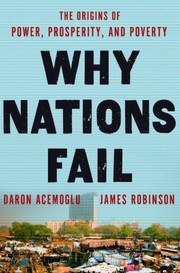 Why Nations FailDaron Acemoglu and James A. RobinsonA sweeping, intellectually rigorous journey through history that decodes the hidden machinery of global inequality.
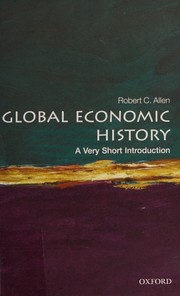 Global economic historyRobert C. AllenA sweeping, efficient distillation of five centuries of global wealth, poverty, and the policies that divided the world.
 Energy in world historyVaclav SmilA sweeping, deeply pragmatic lens on human history that reveals the hidden physical forces shaping our world.
 Why the West Rules - For NowIan MorrisA sweeping, God's-eye view of human history that turns millennia of data into a gripping puzzle about geography, power, and our collective future.
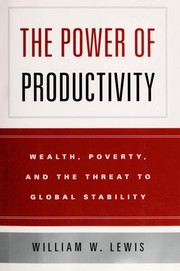 The Power of ProductivityWilliam W. LewisA clear-eyed, data-driven autopsy of global economic inequality and a pragmatic blueprint for structural change.
 The competitive advantage of nationsMichael E. PorterA rigorous, paradigm-shifting exploration of how nations and industries truly build wealth in a complex global economy.