Books › Tragedy of Hyderabad

Tragedy of Hyderabad
308 pages
A statesman's impassioned, elegiac defense of a fallen kingdom and a lost cultural harmony.
What it feels like
Reading this memoir feels like sitting in a dimly lit room with an exiled statesman as he meticulously recounts the final days of a lost world. The pace is steady and deliberate, anchored by the heavy burden of historical record-setting, yet it pulses with an undercurrent of deep indignation and sorrow. The mood is overwhelmingly elegiac, mourning the violent fracture of a composite culture and the erasure of a sovereign state. The prose is formal and authoritative, blending political maneuvering with deeply personal grief. It will deeply engage readers who are drawn to alternative historical narratives, the complexities of post-colonial South Asia, and the poignant, often tragic firsthand accounts of those who stood on the losing side of history.
- Mood
- tense
- elegiac
- somber
- frustrated
- Tone
- impassioned
- defensive
- melancholic
- authoritative
- indignant
- Pace
- steady
- Themes
- loss of sovereignty · historical injustice · destruction of cultural harmony · political betrayal · the weight of memory
- The writing
- Formal, detailed, and deeply personal, blending the bureaucratic precision of a statesman with the sorrow of an exile.
- The arc
- Moves from a proud defense of a lost era to a tense recounting of political maneuvering, culminating in profound grief over an inevitable downfall.
- Who it's for
- Readers fascinated by alternative historical perspectives, post-colonial South Asian history, and first-hand accounts of political collapse.
Content notes
- war and military invasion
- political violence
- forced displacement
- historical trauma
About the book
The true and exact depiction of what exactly happened after independence of Hyderabad State and India from the British Empire as per Independence of India Act. The Princely States were given the option to either join India or Pakistan or remain independent. Hyderabad opted for independence.
Although a Muslim Ruler The Nizam was highly secular and he saw his Hindu and Muslim subjects with the same eye. Hyderabad was a peaceful, prosperous and the best governed State in the Sub-Continent. This book shows you what happened before the fall of Hyderabad. How it was illegally and fraudulently invaded and annexed by India under false pretext having blockaded a land locked country for about an year and then attacking from all sides.
Wishes of people were never ascertained. No referendum was ever taken because as Patel had told Nehru: "don't ever do that mistake The Hindus will vote for The Nizam who they love so much". It is the saddest part of Indian history based on naked aggression. This book tell all and it is a first hand account of The Prime Minister of Hyderabad who was in the thick and thin of events. A more authentic account of what happened is not found. Although so involved he has been dispassionate and extremely accurate as has been corroborated by his contemporaries. The aggressor The Government of India may certainly have a different point of view quite apart from facts. They followed Goebbles justify an aggression to attack and swallow Hyderabad quite against the wishes of the people.
There was a beautiful Hindu Muslim Composite culture that was destroyed. While there was communalism (racism) in the rest of India that was the cause of partition Hyderabad was totally free from that scourge. You will testify to all this from all unbiased books and accounts on Hyderabad. Mir Laik Ali has done a wonderful job for posterity.
CHAPTER I AFTER THE PARTITION It was some date early in November of 1947, when I was strolling about the pleasant lounge of the Santa Cruz Airport at Bombay, good half an hour before the departure time of the Deccan Airways Plane to Hyderabad, when I heard something resembling my name announced on the microphone. It repeated “..........Ali, please call at police office desk.” Anyway, I approached the desk and asked if it was me who was wanted. The police officer indifferently checked up the list and said, “Yes”. “Well!“, I said, “here I am and what is it about?” I was asked if I was going to Hyderabad. “Yes”. I was. Did I have a passport? As it happened I was on my way back from the United States and had my passport on me. After a little pause, I told the police officer that I did have a passport. He did not appear particularly pleased at my producing the document which was full of visas for a good many countries and indicated some diplomatic privileges. He then made a note of the number and date of the passport on a small slip of paper which, even before I had turned my back, he crumpled and threw into the wastepaper basket. I told the police officer that I did not know a passport was needed for Hyderabad. “Ah, yes!“, he said, “Hyderabad is a foreign country!”. I then had to submit my luggage to the crudest examination I ever experienced before it could be sent on board the plane. A little later I met in the lounge someone from Hyderabad, I knew. He appeared greatly agitated. I asked him how he was and what the matter was with him. He said he was being harassed by the police who wanted him to produce a passport or a special permit for journey to Hyderabad and as he was in possession of neither he was having a difficult time. Later, he entered into a heated argument with the police officer and was finally allowed to proceed. I then met some Hindu friends who were also on their way to Hyderabad. I asked them, in course of conversation, if they had also been asked to produce passports or permits to go to Hyderabad and, if their luggage I
Description from Open Library.
Books like Tragedy of Hyderabad
See why they match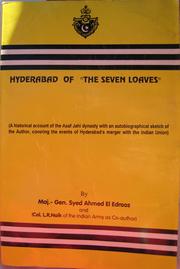 Hyderabad of "the seven loaves"Syed Ahmed El EdroosA melancholic, firsthand witness to the twilight of a princely state and the fading echoes of a centuries-old dynasty.
 Pakistan or partition of IndiaB. AmbedkarA razor-sharp, unsentimental dissection of the political and social fault lines that fractured a subcontinent.
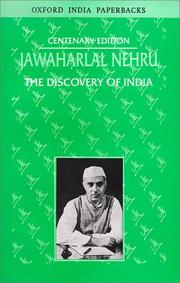 The discovery of IndiaJawaharlal NehruA sweeping, deeply personal meditation on the soul, history, and enduring resilience of an ancient civilization.
 The wonder that was IndiaBasham, A. L.A sweeping, deeply affectionate journey through the art, faith, and daily life of an ancient world.
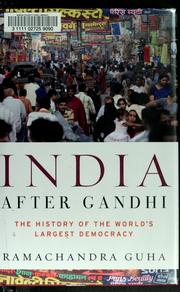 India after GandhiRamachandra GuhaA sweeping, monumental journey through the chaotic, improbable, and triumphant survival of the world's largest democracy.
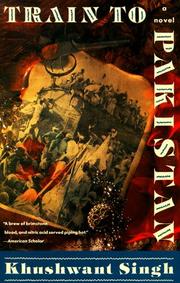 Train to PakistanKhushwant SinghA stark, devastating portrait of a peaceful community fractured by the sudden, brutal arrival of historical trauma.