Books › Utilitarianism

Utilitarianism
First published 1891 · 512 pages
A rigorous, earnest exploration of how we might measure and maximize human happiness for the greater good.
What it feels like
Reading this foundational text feels like sitting in a sunlit Victorian study with a brilliant, earnest reformer who is determined to convince you that a better world is logically possible. The pace is steady and methodical, demanding your full intellectual engagement as it builds its case block by logical block. There is a deeply optimistic undercurrent to the prose, driven by a sincere belief in human progress and the possibility of maximizing collective joy. The mood is serious but never bleak, steeped in a contemplative atmosphere that invites you to weigh your own moral intuitions against a grand ethical calculus. It will delight readers who crave rigorous, lucid arguments and want to wrestle with the philosophical roots of modern social justice.
- Mood
- contemplative
- intellectual
- serious
- Tone
- analytical
- earnest
- persuasive
- didactic
- Pace
- steady
- Themes
- the nature of happiness · moral duty · collective well-being · ethical calculus · justice and utility
- The writing
- Lucid and methodical, the Victorian prose relies on long, carefully balanced sentences that build an unshakeable logical momentum.
- The arc
- The reader moves from a state of intellectual curiosity to a grounded, structured understanding of moral responsibility toward the collective.
- Who it's for
- Readers who enjoy wrestling with foundational ethical questions and appreciate rigorous, historically significant philosophical arguments.
Content notes
- abstract discussions of suffering
About the book
"Because Utilitarianism is a work of enduring value, it is easy to forget that Mill meant for it to be a topical and relevant contribution to the moral debates of his time. In this edition of Mill's essay, Colin Heydt situates the work in its historical context by supplementing the text of the essay with appendices containing excerpts of related works by Mill's predecessors, Mill himself, and prominent critics of his views. The historical richness of this edition of Utilitarianism would surely have pleased Mill, and will surely benefit today's readers." Ben Eggleston, University of Kansas --
"Colin Heydt has made judicious choices about which additional readings to place alongside Utilitarianism itself. In addition, his clearly written introduction paints a very plausible and attractive portrait of Mill as a committed moral reformer, albeit one who recognized that the improvement of the received morality must proceed incrementally. This volume is well suited both for introducing Mill to students and as a resource for scholars who would like to have the most pertinent texts in easy reach." Dale E. Miller, Old Dominion University --
John Stuart Mill's Utilitarianism is a philosophical defence of utilitarianism, a moral theory stating that right actions are those that tend to promote overall happiness. The essay first appeared as a series of articles published in Fraser's Magazine in 1861; the articles were collected and reprinted as a single book in 1863. Mill discusses utilitarianism in some of his other works, including On Liberty and The Subjection of Women, but Utilitarianism contains his only sustained defence of the theory. --
In this Broadview Edition, Colin Heydt provides a substantial introduction that will enable readers to understand better the polemical context for Utilitarianism. Heydt shows, for example, how Mill's moral philosophy grew out of political engagement, rather than exclusively out of a speculative interest in determining the nature of morality. Appendices include precedents to Mill's work, reactions to Utilitarianism, and related writings by Mill. --Book Jacket.
Description from Open Library.
Books like Utilitarianism
See why they match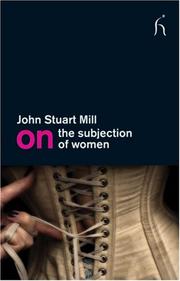 The Subjection of WomenJohn Stuart MillA methodical, impassioned dismantling of patriarchal logic that feels as urgent today as it did in the nineteenth century.
 On LibertyJohn Stuart MillA rigorous, impassioned defense of the individual mind against the crushing weight of societal conformity.
 A theory of justiceJohn RawlsA rigorous, monumental thought experiment that challenges you to rebuild society from scratch behind a veil of ignorance.
 Political theoryAndrew HeywoodA clarifying, accessible journey through the complex ideas that govern human societies and shape our political reality.
 The theory of moral sentimentsAdam SmithA foundational exploration of how human sympathy and the impartial spectator guide our moral compass.
 JusticeMichael SandelA stimulating intellectual workout that transforms abstract philosophy into urgent, everyday moral questions.