Books › Weapons of Math Destruction

Weapons of Math Destruction
352 pages
An urgent, eye-opening exploration of how invisible algorithms quietly dictate our lives and reinforce societal inequalities.
What it feels like
Reading this book feels like having a blindfold suddenly removed, revealing the hidden, often chilling machinery that governs modern society. The pace is brisk and engaging, propelled by an urgent, conversational voice that makes complex data science feel deeply personal and immediately relevant. You will find yourself moving from mild curiosity to profound alarm as the narrative exposes the illusion of mathematical objectivity. The mood is undeniably dystopian, yet grounded entirely in our present reality, creating a thought-provoking atmosphere that lingers long after the final page. It is a must-read for socially conscious thinkers, tech skeptics, and anyone who suspects that the systems designed to optimize our world are quietly leaving the most vulnerable behind.
- Mood
- alarming
- eye-opening
- dystopian
- thought-provoking
- Tone
- urgent
- accessible
- critical
- cautionary
- empathetic
- Pace
- brisk
- Themes
- systemic inequality · illusion of objectivity · human cost of efficiency · technological overreach · erosion of democracy
- The writing
- Clear, conversational, and highly persuasive, effortlessly translating opaque mathematical concepts into compelling human narratives.
- The arc
- Transitions from a baseline trust in digital systems to a profound, unsettling awareness of their biases, culminating in an urgent desire for systemic reform.
- Who it's for
- Socially conscious readers, tech skeptics, and anyone who wants to understand the invisible digital forces shaping modern inequality.
Content notes
- systemic racism
- classism
- poverty
- discrimination
About the book
A former Wall Street quant sounds an alarm on the mathematical models that pervade modern life — and threaten to rip apart our social fabric
We live in the age of the algorithm. Increasingly, the decisions that affect our lives—where we go to school, whether we get a car loan, how much we pay for health insurance—are being made not by humans, but by mathematical models. In theory, this should lead to greater fairness: Everyone is judged according to the same rules, and bias is eliminated.
But as Cathy O’Neil reveals in this urgent and necessary book, the opposite is true. The models being used today are opaque, unregulated, and uncontestable, even when they’re wrong. Most troubling, they reinforce discrimination: If a poor student can’t get a loan because a lending model deems him too risky (by virtue of his zip code), he’s then cut off from the kind of education that could pull him out of poverty, and a vicious spiral ensues. Models are propping up the lucky and punishing the downtrodden, creating a “toxic cocktail for democracy.” Welcome to the dark side of Big Data.
Tracing the arc of a person’s life, O’Neil exposes the black box models that shape our future, both as individuals and as a society. These “weapons of math destruction” score teachers and students, sort résumés, grant (or deny) loans, evaluate workers, target voters, set parole, and monitor our health.
O’Neil calls on modelers to take more responsibility for their algorithms and on policy makers to regulate their use. But in the end, it’s up to us to become more savvy about the models that govern our lives. This important book empowers us to ask the tough questions, uncover the truth, and demand change.
Longlist for National Book Award (Non-Fiction) — Goodreads, semi-finalist for the 2016 Goodreads Choice Awards (Science and Technology) — Kirkus, Best Books of 2016 — New York Times, 100 Notable Books of 2016 (Non-Fiction) — The Guardian, Best Books of 2016 — WBUR’s “On Point,” Best Books of 2016: Staff Picks — Boston Globe, Best Books of 2016, Non-Fiction
Description from Open Library.
Books like Weapons of Math Destruction
See why they match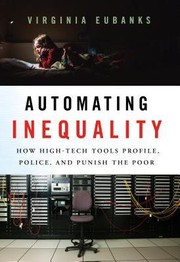 Automating InequalityVirginia EubanksA sobering, urgent investigation into how modern algorithms encode and amplify bureaucratic cruelty against the most vulnerable.
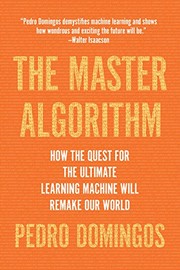 The Master AlgorithmPedro DomingosA visionary, intellectually thrilling safari through the hidden logic that powers our modern world and promises to reshape our future.
 Hello worldHannah FryA witty, eye-opening tour through the invisible code that runs our lives, balancing technological awe with a healthy dose of skepticism.
 The Alignment ProblemBrian ChristianA gripping, eye-opening journey into the minds of the machines we've built and the urgent scramble to teach them human values.
 Automate thisChristopher SteinerA brisk, slightly unnerving peek behind the digital curtain at the invisible code running our world.
 Living in DataJer ThorpA provocative and eye-opening journey into the invisible numbers that shape our social reality.