Books › Writing & illuminating, & lettering
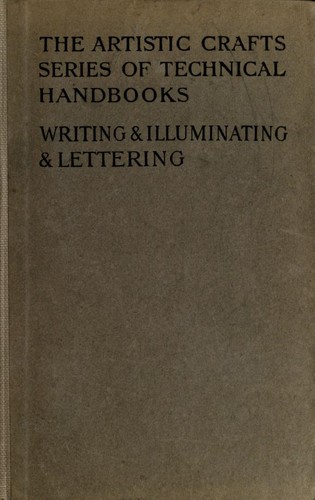
Writing & illuminating, & lettering
First published 1906 · 512 pages
A quiet, meticulous masterclass that invites you to slow down and find beauty in the deliberate stroke of a pen.
What it feels like
Reading this book feels like stepping into a sunlit, dust-moted workshop from a century ago, guided by a master who reveres the simple act of putting ink to paper. It is a deeply grounding, steady experience that demands patience and rewards it with a profound appreciation for the architecture of the written word. The prose is formal yet infused with a quiet, infectious passion for craftsmanship, turning technical instruction into a meditation on design, history, and human expression. It is not a text you rush through; rather, it is a companion for the slow, deliberate practice of art. Typographers, calligraphers, and anyone who yearns for the tactile satisfaction of analog creation will find this an indispensable, soul-soothing manual.
- Mood
- studious
- quiet
- contemplative
- focused
- Tone
- reverent
- meticulous
- authoritative
- earnest
- Pace
- steady
- Themes
- the beauty of craftsmanship · historical continuity · mindful creation · the discipline of practice · art meeting utility
- The writing
- Formal, precise, and deeply passionate about the minutiae of the craft, echoing the deliberate nature of calligraphy itself.
- The arc
- A journey from curious observation to a deep, grounded reverence for the tactile art of letterforms.
- Who it's for
- Artists, typographers, and analog enthusiasts who find peace in the slow, meticulous practice of making things by hand.
About the book
The crafts of writing, illuminating and lettering offer a wide field for the ingenious and careful craftsman and open the way to a variety of rewarding occupations apart from their very great educational value. In this superbly comprehensive volume, these three skills are clearly and fascinatingly explained with hundreds of illustrations and diagrams. The book is planned as a guide to models and methods for letter-craftsmen and students, especially those who cannot see the actual processes carried out and who may not have access to collections of MSS. Edward Johnston traces the development of writing, giving us insight into the construction of letters, and offers valuable advice on the acquisition of a formal or "book" hand. His detailed explanation of the theory and development of illustration shows how the practice of this art is one of the most simple and complete ways of acquiring a knowledge of the elements of design and decoration. The world of lettering is also fully explored together with the Roman alphabet and its derivatives. The innumerable practical applications of lettering -- most important in the making of books -- make the study of lettercraft not only absorbing but imperative. - Back cover.
Description from Open Library.
Books like Writing & illuminating, & lettering
See why they match The Elements of Typographic StyleRobert BringhurstA poetic and authoritative masterclass in the invisible architecture of the written word.
 Designing typeKaren ChengA masterclass in the invisible architecture of the alphabet, turning the act of reading into a study of microscopic visual harmony.
 Successful drawingAndrew LoomisA witty, classic masterclass in the fundamentals of realist drawing and three-dimensional form.
 Thinking with TypeEllen LuptonA visually arresting, deeply practical masterclass that permanently changes the way you look at the printed word.
 Creative illustrationScott B. SmithA masterclass in visual storytelling that feels like pulling up a chair in a mid-century illustrator's bustling studio.
 Rendering with Pen and InkRobert W. GillA quiet, meticulous masterclass in translating light, shadow, and structure onto paper through the disciplined scratch of a nib.