Books › A framework for understanding poverty

A framework for understanding poverty
First published 1995 · 231 pages
A pragmatic, eye-opening guide that decodes the hidden social rules of economic class to foster empathy and effective communication.
What it feels like
Reading this book feels like being handed a decoder ring for societal behaviors and institutional disconnects that previously seemed baffling. The experience is highly structured and steady, driven by comparative charts, lists, and direct prose rather than a flowing narrative. It cultivates a reflective, serious atmosphere, prompting you to constantly re-evaluate your own ingrained assumptions and cultural biases. While the categorical approach can feel rigid, the overarching sensation is one of earnest, pragmatic problem-solving. It is devoured by educators, social workers, and community advocates who are searching for actionable frameworks to bridge the gap between their institutions and marginalized communities, ultimately leaving the reader feeling both practically equipped and intellectually challenged.
- Mood
- reflective
- serious
- eye-opening
- Tone
- pragmatic
- didactic
- analytical
- earnest
- Pace
- steady
- Themes
- hidden social rules · class dynamics · educational equity · cultural capital · systemic barriers
- The writing
- Clear, accessible, and highly structured, relying on straightforward explanations, lists, and comparative charts.
- The arc
- Transitions from a sense of societal confusion to a structured, empathetic clarity about the realities of economic class.
- Who it's for
- Educators, social workers, and community leaders seeking practical frameworks to better understand and support marginalized populations.
Content notes
- discussions of poverty
- systemic inequality
- domestic dysfunction
About the book
Includes bibliographical references (p. 198-205) and index.
A copy of this item is available at the Center for Educational Pluralism, located in Miller Hall 250.
A copy of this item is owned by Self-Sustaining Programs. Use of this copy requires program enrollment. Click on the link in the LOCATION box for more information.
Description from Open Library.
Books like A framework for understanding poverty
See why they match Differentiating Instruction in the Regular ClassroomDiane HeacoxAn encouraging, pragmatic toolkit that transforms the overwhelming challenge of diverse classrooms into an achievable, structured practice.
 ClassPaul FussellA wickedly funny, unsparing taxonomy of the invisible hierarchies that dictate American life.
 The bell curveRichard J. HerrnsteinA dense, highly controversial academic treatise that attempts to map the societal implications of cognitive stratification.
 For White folks who teach in the hood ... and the rest of y'all tooChristopher EmdinA passionate, practical manifesto that reimagines the urban classroom as a space of cultural respect and mutual empowerment.
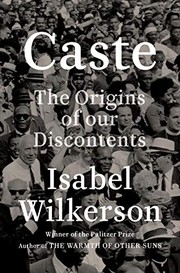 CasteIsabel WilkersonA paradigm-shifting lens that reframes everything you thought you knew about American history and the invisible architecture of power.
 Basic economicsThomas SowellA masterclass in stripping away political rhetoric to reveal the hidden, often counterintuitive gears that drive human societies.