Books › Against the Grain
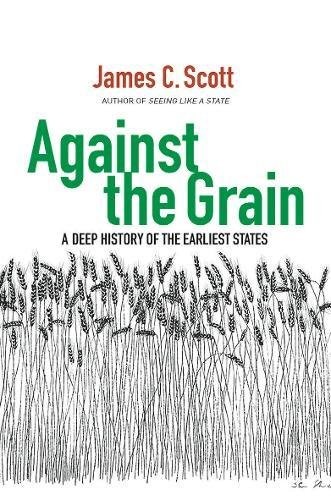
Against the Grain
A Deep History of the Earliest States
336 pages
A paradigm-shifting journey into deep history that completely upends the comforting myth of human progress.
What it feels like
Reading this book feels like putting on a pair of glasses that suddenly brings the deep past into sharp, uncomfortable focus. It is a steady, methodical dismantling of the stories we tell ourselves about the triumph of civilization. The mood is intensely intellectual and paradigm-shifting, grounding you in the muddy, disease-ridden reality of early agrarian states while celebrating the freedom of the barbarians who evaded them. The prose is clear, persuasive, and refreshingly free of dense academic jargon, making complex archaeological evidence feel like a gripping detective story. It will absolutely delight history buffs, anthropology nerds, and anyone who loves the thrill of having their foundational assumptions about human progress thoroughly and convincingly turned upside down.
- Mood
- intellectual
- paradigm-shifting
- grounded
- Tone
- contrarian
- analytical
- inquisitive
- authoritative
- Pace
- steady
- Themes
- the myth of progress · freedom versus control · the cost of civilization · ecological consequences · human domestication
- The writing
- Clear, persuasive, and academically rigorous yet highly readable, favoring sharp arguments over dense jargon.
- The arc
- Begins with a curiosity about human origins and builds to a profound, slightly unsettling realization of how deeply we are domesticated by our own systems.
- Who it's for
- Readers who love having their foundational assumptions about human history and the march of progress thoroughly dismantled.
Content notes
- discussions of slavery
- disease and epidemics
- patriarchal control
About the book
An account of all the new and surprising evidence now available for the beginnings of the earliest civilizations that contradict the standard narrative. Why did humans abandon hunting and gathering for sedentary communities dependent on livestock and cereal grains, and governed by precursors of today's states? Most people believe that plant and animal domestication allowed humans, finally, to settle down and form agricultural villages, towns, and states, which made possible civilization, law, public order, and a presumably secure way of living. But archaeological and historical evidence challenges this narrative. The first agrarian states, says James C. Scott, were born of accumulations of domestications: first fire, then plants, livestock, subjects of the state, captives, and finally women in the patriarchal family--all of which can be viewed as a way of gaining control over reproduction. Scott explores why we avoided sedentism and plow agriculture, the advantages of mobile subsistence, the unforeseeable disease epidemics arising from crowding plants, animals, and grain, and why all early states are based on millets and cereal grains and unfree labor. He also discusses the "barbarians" who long evaded state control, as a way of understanding continuing tension between states and nonsubject peoples.
Description from Open Library.
Books like Against the Grain
See why they match The Dawn of EverythingDavid Graeber and David WengrowA sweeping, paradigm-shattering intellectual adventure that rewrites the story of human potential.
 Seeing Like a StateJames C. ScottA paradigm-shifting exploration of why grand, top-down utopian schemes inevitably collapse under the weight of their own rigid logic.
 The Ecology of FreedomMurray BookchinA sweeping, interdisciplinary manifesto that traces the roots of human domination and charts a visionary path toward ecological liberation.
 Catching fireRichard WranghamA paradigm-shifting exploration of how the simple act of cooking transformed our ancestors into modern humans.
 The collapse of complex societiesTainter, JosephA rigorous, sobering exploration of how the very complexity we build to solve our problems eventually becomes the weight that crushes us.
 War! What is it good for?Ian MorrisA sweeping, provocative exploration of how humanity's most destructive impulse paradoxically paved the way for modern peace and prosperity.