Books › The Dawn of Everything
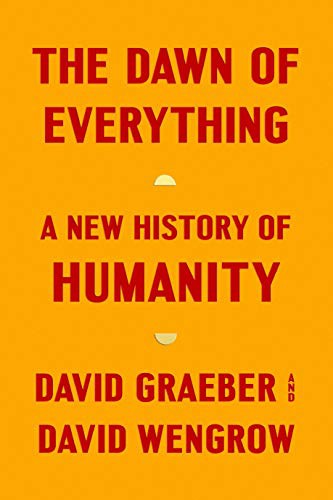
The Dawn of Everything
848 pages
A sweeping, paradigm-shattering intellectual adventure that rewrites the story of human potential.
What it feels like
Reading this book feels like stepping out of a cramped, windowless room into a vast, sunlit landscape of human possibility. It is a steady, monumental intellectual journey that systematically dismantles the cynical, linear narratives of history we have been taught since childhood. The prose is erudite yet surprisingly conversational, laced with a wry, iconoclastic energy that makes dense archaeological theory feel like a thrilling detective story. You are immersed in an atmosphere of profound curiosity and radical hope, guided by authors who trust your intelligence. It delights the deeply curious reader—the armchair anthropologist who loves having their fundamental assumptions challenged. Ultimately, it leaves you with a liberating sense that human societies have always been wildly experimental, and that our future remains unwritten.
- Mood
- intellectually expansive
- paradigm-shifting
- hopeful
- inquisitive
- Tone
- iconoclastic
- erudite
- conversational
- provocative
- wry
- Pace
- steady
- Themes
- the myth of linear progress · human political imagination · indigenous critiques of the West · the origins of inequality · radical freedom
- The writing
- Accessible yet deeply scholarly, blending wry humor with sweeping, authoritative synthesis.
- The arc
- Moves from a destabilizing dismantling of accepted history to a liberating, hopeful realization of human agency.
- Who it's for
- Curious skeptics and armchair anthropologists who love having their fundamental assumptions about human nature dismantled and rebuilt.
Content notes
- historical violence
- colonialism
- slavery
About the book
The renowned activist and public intellectual David Graeber teams up with the professor of comparative archaeology David Wengrow to deliver a trailblazing account of human history, challenging our most fundamental assumptions about social evolution—from the development of agriculture and cities to the emergence of "the state," political violence, and social inequality—and revealing new possibilities for human emancipation
For generations, our remote ancestors have been cast as primitive and childlike—either free and equal innocents, or thuggish and warlike. Civilization, we are told, could be achieved only by sacrificing those original freedoms or, alternatively, by taming our baser instincts. David Graeber and David Wengrow show how such theories first emerged in the eighteenth century as a conservative reaction to powerful critiques of European society posed by Indigenous observers and intellectuals. Revisiting this encounter has startling implications for how we make sense of human history today, including the origins of farming, property, cities, democracy, slavery, and civilization itself.
Drawing on pathbreaking research in archaeology and anthropology, the authors show how history becomes a far more interesting place once we learn to throw off our conceptual shackles and perceive what’s really there. If humans did not spend 95 percent of their evolutionary past in tiny bands of hunter-gatherers, what were they doing all that time? If agriculture, and cities, did not mean a plunge into hierarchy and domination, then what kinds of social and economic organization did they lead to? What was really happening during the periods that we usually describe as the emergence of "the state"? The answers are often unexpected, and suggest that the course of human history may be less set in stone, and more full of playful, hopeful possibilities, than we tend to assume.
The Dawn of Everything fundamentally transforms our understanding of the human past and offers a path toward imagining new forms of freedom, new ways of organizing society. This is a monumental book of formidable intellectual range, animated by curiosity, moral vision, and a faith in the power of direct action.
Description from Open Library.
Books like The Dawn of Everything
See why they match Against the GrainJames C. ScottA paradigm-shifting journey into deep history that completely upends the comforting myth of human progress.
 The 1619 ProjectNikole Hannah-JonesAn unflinching, paradigm-shifting reckoning with the roots of American society that demands you look history squarely in the eye.
 The world until yesterdayJared DiamondA sweeping, reflective journey that holds up a mirror to modern life by examining the traditional societies we left behind.
 Stamped from the BeginningIbram X. KendiA monumental, paradigm-shifting journey through the intellectual history of American racism that demands a fundamental rewiring of how you view the present.
 The Ecology of FreedomMurray BookchinA sweeping, interdisciplinary manifesto that traces the roots of human domination and charts a visionary path toward ecological liberation.
 SapiensYuval Noah HarariA sweeping, paradigm-shifting journey that reveals the everyday structures of human life as nothing more than powerful, shared fictions.