Books › Nexus
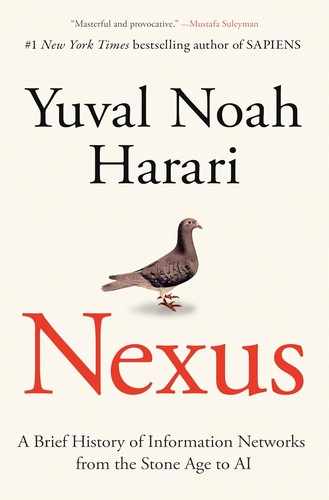
Nexus
A Brief History of Information Networks from the Stone Age to AI
524 pages
A sweeping, bird's-eye view of human history that leaves you both marveling at our ingenuity and deeply unsettled by our future.
What it feels like
Reading this book feels like standing on a mountaintop, watching the entire tapestry of human civilization unfold below you, only to notice a massive, dark storm cloud gathering on the horizon. It is a deeply intellectual and expansive experience, moving at a steady, deliberate pace that allows complex ideas about truth, myth, and bureaucracy to sink in. The prose is lucid and accessible, translating dense historical and technological shifts into striking, memorable metaphors. While the early chapters evoke a sense of awe at human cooperation, the mood gradually shifts toward something far more ominous and urgent as it approaches the modern era. It is a perfect read for big-picture thinkers who want to contextualize the dizzying rise of AI within the grand, often self-destructive arc of human history.
- Mood
- expansive
- contemplative
- ominous
- intellectual
- Tone
- authoritative
- cautionary
- philosophical
- urgent
- accessible
- Pace
- steady
- Themes
- the power of myth · existential risk · truth versus power · technological acceleration · human self-destruction
- The writing
- Lucid and highly accessible, relying on grand metaphors and sweeping historical syntheses to distill complex systems into digestible concepts.
- The arc
- Begins with a sweeping awe for human cognitive evolution and gradually narrows into a sobering, urgent apprehension about our immediate future.
- Who it's for
- Curious, big-picture thinkers who enjoy macro-history and are seeking a philosophical framework to understand the looming AI revolution.
Content notes
- existential dread
- discussions of totalitarianism
- ecological collapse
About the book
From the author of Sapiens comes the groundbreaking story of how information networks have made, and unmade, our world.
For the last 100,000 years, we Sapiens have accumulated enormous power. But despite all our discoveries, inventions, and conquests, we now find ourselves in an existential crisis. The world is on the verge of ecological collapse. Misinformation abounds. And we are rushing headlong into the age of AI—a new information network that threatens to annihilate us. For all that we have accomplished, why are we so self-destructive?
Nexus looks through the long lens of human history to consider how the flow of information has shaped us, and our world. Taking us from the Stone Age, through the canonization of the Bible, early modern witch-hunts, Stalinism, Nazism, and the resurgence of populism today, Yuval Noah Harari asks us to consider the complex relationship between information and truth, bureaucracy and mythology, wisdom and power. He explores how different societies and political systems throughout history have wielded information to achieve their goals, for good and ill. And he addresses the urgent choices we face as non-human intelligence threatens our very existence.
Information is not the raw material of truth; neither is it a mere weapon. Nexus explores the hopeful middle ground between these extremes, and in doing so, rediscovers our shared humanity.
Description from Open Library.
Books like Nexus
See why they match SapiensYuval Noah HarariA sweeping, paradigm-shifting journey that reveals the everyday structures of human life as nothing more than powerful, shared fictions.
 21 Lessons for the 21st CenturyYuval Noah HarariA clarifying, panoramic sweep of the modern world's most urgent anxieties, offering a steadying hand in an age of information overload.
 Square and the TowerNiall FergusonA sweeping, analytical journey through world history that reframes human civilization as an endless tug-of-war between rigid hierarchies and fluid social networks.
 Life 3.0Max TegmarkA mind-expanding journey to the very edges of technological possibility and human purpose.
 DoppelgangerNaomi KleinA dizzying, deeply personal descent into the funhouse mirror of modern internet culture and political extremism.
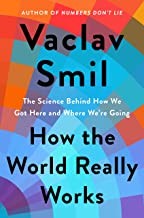 How the World Really WorksVaclav SmilA bracing, data-drenched cold plunge into the physical realities and hidden infrastructures that keep modern civilization running.