Books › Post-truth

Post-truth
240 pages
A sobering but empowering intellectual toolkit for navigating an era where feelings are weaponized against facts.
What it feels like
Reading this book feels like stepping back from the chaotic noise of modern media to look at the underlying machinery of misinformation. The pace is steady and analytical, guiding the reader through a sobering landscape of cognitive biases, science denial, and political spin without descending into despair. Instead, the mood is urgent and intellectually stimulating, offering a clear-eyed diagnosis of how ideological supremacy attempts to overwrite objective reality. The prose is accessible yet provocative, distilling complex psychological and sociological shifts into sharp, digestible insights. It is a deeply grounding experience, designed for readers who want to move past the exhaustion of the daily news cycle and arm themselves with the understanding needed to fight back against the erosion of truth.
- Mood
- sobering
- intellectually stimulating
- urgent
- contemplative
- Tone
- analytical
- urgent
- provocative
- informative
- resolute
- Pace
- steady
- Themes
- the erosion of objective reality · cognitive bias and self-deception · the weaponization of information · ideological supremacy · the defense of facts
- The writing
- Clear, analytical, and accessible, designed to distill complex psychological and political phenomena into digestible insights.
- The arc
- Moves from a sobering diagnosis of our fractured informational reality to a resolute, empowering call to understand and combat it.
- Who it's for
- Readers seeking a clear-eyed, intellectual framework to understand the modern crisis of misinformation and political spin.
Content notes
- political polarization
- science denial
- misinformation
About the book
"Are we living in a post-truth world, where “alternative facts” replace actual facts and feelings have more weight than evidence? How did we get here? In this volume in the MIT Press Essential Knowledge series, Lee McIntyre traces the development of the post-truth phenomenon from science denial through the rise of “fake news,” from our psychological blind spots to the public's retreat into information silos. What, exactly, is post-truth? Is it wishful thinking, political spin, mass delusion, bold-faced lying? McIntyre analyzes recent examples?claims about inauguration crowd size, crime statistics, and the popular vote?and finds that post-truth is an assertion of ideological supremacy by which its practitioners try to compel someone to believe something regardless of the evidence. Yet post-truth didn't begin with the 2016 election; the denial of scientific facts about smoking, evolution, vaccines, and climate change offers a road map for more widespread fact denial. Add to this the wired-in cognitive biases that make us feel that our conclusions are based on good reasoning even when they are not, the decline of traditional media and the rise of social media, and the emergence of fake news as a political tool, and we have the ideal conditions for post-truth. McIntyre also argues provocatively that the right wing borrowed from postmodernism?specifically, the idea that there is no such thing as objective truth?in its attacks on science and facts. McIntyre argues that we can fight post-truth, and that the first step in fighting post-truth is to understand it" -- publisher's website.
Description from Open Library.
Books like Post-truth
See why they match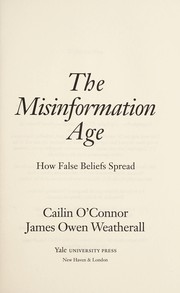 The misinformation ageCailin O'ConnorAn analytical deep dive into the social machinery that allows false beliefs to thrive in the modern world.
 This Is Not PropagandaPeter PomerantsevA dizzying, globe-trotting descent into the funhouse mirror of modern disinformation and the weaponization of reality.
 Network PropagandaYochai BenklerA rigorous, data-driven deep dive into the mechanics of modern political media and the architecture of disinformation.
 The death of expertiseThomas M. NicholsA sharp, exasperated diagnosis of our modern information crisis that validates your frustration with the 'do your own research' era.
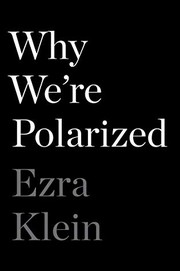 Why We're PolarizedEzra KleinA clarifying, systemic lens that brings the chaotic and frustrating landscape of modern American politics into sharp, sobering focus.
 The age of American unreasonSusan JacobyA fierce, erudite wake-up call for a culture drowning in infotainment and willful ignorance.