Books › Science and technology in world history
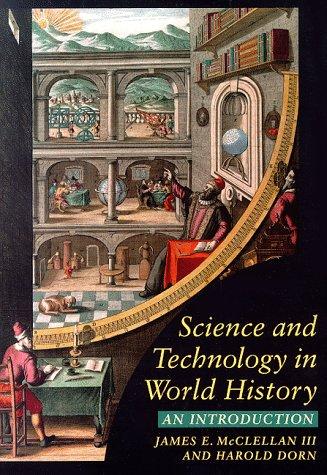
Science and technology in world history
First published 1999 · 552 pages
A sweeping, panoramic view of human progress that untangles the complex, often surprising relationship between the thinkers and the makers.
What it feels like
Reading this book feels like stepping back to view the entire tapestry of human civilization from a great height. The pace is steady and measured, guiding you through millennia of history with a scholarly yet accessible tone. It replaces the breathless drama of narrative history with the quiet, grounded thrill of intellectual discovery. The mood is expansive and deeply curious, inviting you to marvel at the slow, often disconnected evolution of abstract scientific theory and practical artisanship. The prose is clear and authoritative, designed to illuminate complex historical shifts without getting bogged down in academic jargon. It is a deeply satisfying experience for readers who love connecting the dots across centuries, offering a profound appreciation for the unsung artisans and visionary thinkers who built the modern world.
- Mood
- intellectual
- expansive
- grounded
- curious
- Tone
- scholarly
- objective
- analytical
- measured
- informative
- Pace
- steady
- Themes
- evolution of human ingenuity · intersection of theory and practice · societal impact of innovation · the long arc of progress
- The writing
- Clear, authoritative, and structured, prioritizing historical synthesis and clarity over narrative flourish.
- The arc
- Moves from a sense of ancient wonder at early human ingenuity to a complex, nuanced understanding of modern industrial interconnectedness.
- Who it's for
- Curious history buffs and science enthusiasts who crave a macro-level understanding of how human civilization built its technological foundations.
About the book
In modern industrial society, the tie between science and technology seems clear, even inevitable. But historically, as James E. McClellan III and Harold Dorn remind us, the connection has been far less apparent. For much of human history, technology depended more on the innovation of skilled artisans than it did on the speculation of scientists. Technology as "applied science," the authors argue, emerged relatively recently, as industry and governments began funding scientific research that would lead directly to new or improved technologies. In Science and Technology in World History, McClellan and Dorn offer an introduction to this changing relationship.
McClellan and Dorn review the historical record beginning with the thinking and tool making of prehistoric humans. Neolithic people, for example, developed metallurgy of a sort, using naturally occurring raw copper, and kept systematic records of the moon's phases. Neolithic craftsmen possessed practical knowledge of the behavior of clay, fire, and other elements of their environment, but though they may have had explanations for the phenomena of their crafts, they toiled without any systematic science of materials or the self-conscious application of theory to practice.
McClellan and Dorn identify two great scientific traditions: the useful sciences, patronized by the state from the dawn of civilization, and scientific theorizing, initiated by the ancient Greeks. Theirs is a survey of the historical twists and turns of these traditions, leading to the science of our own day.
Without neglecting important figures of Western science such as Newton and Einstein, the authors demonstrate the great achievements of non-Western cultures. They remind us that scientific traditions took root in China, India, and Central and South America, as well as in a series of Near Eastern empires, during late antiquity and the Middle Ages, including the vast region that formed the Islamic conquest. From this comparative perspective, the authors explore the emergence of Europe as a scientific and technological power. Continuing their narrative through the Manhattan Project, NASA, and modern medical research, the authors weave the converging histories of science and technology into an integrated, perceptive, and highly readable narrative.
Description from Open Library.
Books like Science and technology in world history
See why they match Energy in world historyVaclav SmilA sweeping, deeply pragmatic lens on human history that reveals the hidden physical forces shaping our world.
 The Day the Universe ChangedBurke, JamesA dizzying, exhilarating ride through the hidden connections and paradigm shifts that built the modern mind.
 The pursuit of powerWilliam H. McNeillA sweeping, sobering journey through a millennium of human conflict, tracing how markets and technology forged the modern military-industrial complex.
 Why the West Rules - For NowIan MorrisA sweeping, God's-eye view of human history that turns millennia of data into a gripping puzzle about geography, power, and our collective future.
 The wealth and poverty of nationsDavid S. LandesA sweeping, opinionated masterclass in economic history that challenges the reader to grapple with the cultural and technological roots of global inequality.
 ConnectionsBurke, JamesA dizzying, delightful connect-the-dots journey through history that reveals the hidden threads linking ancient accidents to modern marvels.