Books › The Day the Universe Changed
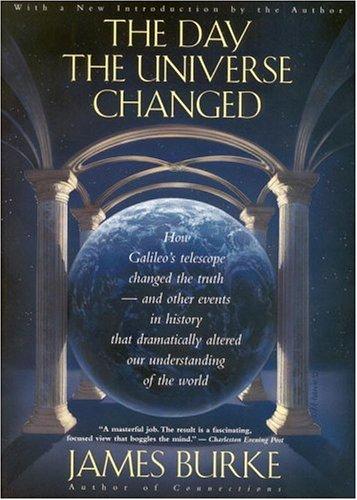
The Day the Universe Changed
First published 1985 · 352 pages
A dizzying, exhilarating ride through the hidden connections and paradigm shifts that built the modern mind.
What it feels like
Reading this book feels like sitting down with a brilliantly charismatic professor who is determined to blow your mind by connecting the dots of human history. The pace is brisk and energetic, pulling you through centuries of scientific and cultural revolutions with a witty, conversational flair. It is an intellectually stimulating and expansive experience, wrapping the reader in a mood of profound curiosity and awe. Rather than a dry recitation of dates, the narrative focuses on the dizzying ripple effects of human ingenuity, showing how a single discovery can entirely rewrite our understanding of reality. It is perfect for curious generalists who delight in big history and want to experience the exhilarating vertigo of realizing that the universe is ultimately what we say it is.
- Mood
- intellectually stimulating
- expansive
- awe-inspiring
- curious
- Tone
- inquisitive
- witty
- authoritative
- engaging
- philosophical
- Pace
- brisk
- Themes
- paradigm shifts · interconnectedness of knowledge · subjective nature of truth · human ingenuity · ripple effects of technology
- The writing
- Conversational and charismatic, driven by rapid-fire connections and a masterful storytelling flair that makes complex epistemology feel like a detective story.
- The arc
- Begins with a comfortable curiosity about the past and builds to a dizzying, exhilarating realization of how fragile and subjective our modern certainties truly are.
- Who it's for
- Curious generalists and history buffs who love big history narratives that reveal the hidden threads connecting seemingly unrelated events.
Content notes
- historical violence
- medical trauma
About the book
"In The Day the Universe Changed, James Burke examines eight periods in history when our view of the world shifted dramatically: in the eleventh century, when extraordinary discoveries were made by Spanish crusaders; in fourteenth-century Florence, where perspective in painting emerged; in the fifteenth century, when the advent of the printing press shook the foundations of an oral society; in the sixteenth century, when gunnery developments triggered the birth of modern science; in the early eighteenth century, when hot English summers brought on the Industrial Revolution; in the battlefield surgery stations of the French revolutionary armies, where people first became statistics; in the nineteenth century, when the discovery of dinosaur fossils led to the theory of evolution; and in the 1820s, when electrical experiments heralded the end of scientific certainty." "Based on the popular television documentary series, The Day the Universe Changed is a bestselling history that challenges the reader to decide whether there is absolute knowledge to discover - or whether the universe is "ultimately what we say it is.""--BOOK JACKET.
Description from Open Library.
Books like The Day the Universe Changed
See why they match ConnectionsBurke, JamesA dizzying, delightful connect-the-dots journey through history that reveals the hidden threads linking ancient accidents to modern marvels.
 The age of wonderHolmes, RichardA sweeping, luminous journey into the minds of the dreamers and explorers who married poetry with the scientific method.
 How we got to nowSteven JohnsonA thrilling intellectual treasure hunt that reveals the invisible threads connecting a glass of clean water to the invention of the microchip.
 Science and technology in world historyHarold DornA sweeping, panoramic view of human progress that untangles the complex, often surprising relationship between the thinkers and the makers.
 IdeasPeter WatsonA sweeping, panoramic journey through the evolution of human thought that leaves the reader feeling intellectually expanded and deeply connected to the past.
 Energy in world historyVaclav SmilA sweeping, deeply pragmatic lens on human history that reveals the hidden physical forces shaping our world.