Books › The Annotated Turing

The Annotated Turing
300 pages
A patient, deeply rewarding guided tour through the mathematical DNA of the modern computer.
What it feels like
Reading this book feels like sitting in a quiet, sunlit library with a brilliant, endlessly patient tutor. It is not a book you rush through; it demands a steady, contemplative pace, asking you to pause, trace lines of logic, and wrestle with abstract concepts until they suddenly click into place. The mood is deeply intellectual and quietly awe-inspiring, stripping away the magic of modern technology to reveal the elegant, rigorous mathematical bedrock beneath. The prose is lucid and methodical, acting as a bridge across decades of computer science history. It is a profoundly satisfying experience for curious programmers, math enthusiasts, and history buffs who crave the hard-won clarity that comes from finally understanding a work of foundational genius.
- Mood
- intellectual
- focused
- illuminating
- contemplative
- Tone
- analytical
- patient
- reverent
- lucid
- educational
- Pace
- steady
- Themes
- the limits of logic · foundations of computing · historical genius · mathematical beauty
- The writing
- Methodical and highly structured, acting as a patient translator between dense mathematical notation and modern understanding.
- The arc
- Moves from a sense of daunting complexity to a deeply satisfying, hard-won clarity.
- Who it's for
- Curious programmers and math enthusiasts who love peering under the hood of modern technology to understand its absolute theoretical bedrock.
About the book
Programming Legend Charles Petzold unlocks the secrets of the extraordinary and prescient 1936 paper by Alan M. Turing.
Mathematician Alan Turing invented an imaginary computer known as the Turing Machine; in an age before computers, he explored the concept of what it meant to be computable, creating the field of computability theory in the process, a foundation of present-day computer programming.
Description from Open Library.
Books like The Annotated Turing
See why they match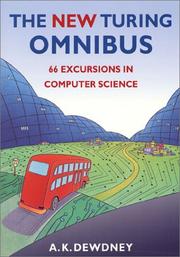 The (new) turing omnibusA.K. DewdneyA guided tour through the elegant, invisible architecture of logic that powers the modern world.
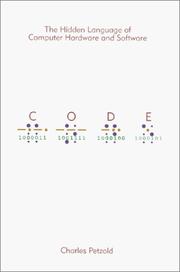 CodeCharles PetzoldA brilliantly patient unraveling of the magic inside our machines, turning complex engineering into a beautifully logical story of human communication.
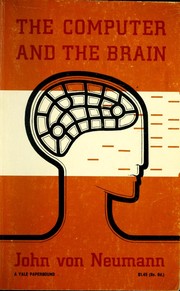 The computer and the brainJohn Von NeumannA visionary, foundational text that bridges the gap between the architecture of early machines and the profound mysteries of the human nervous system.
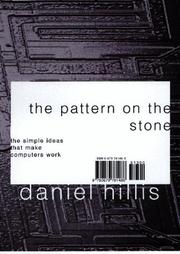 The pattern on the stoneW. Daniel HillisA remarkably clear window into the hidden logic that powers our digital world, turning magic back into mechanics.
 Gödel, Escher, BachDouglas R. HofstadterA dizzying, playful labyrinth of logic, art, and music that fundamentally rewires how you think about thinking.
 Introduction to automata theory, languages, and computationJohn E. Hopcroft, Jeffrey D. Ullman and othersA rigorous, mind-expanding journey into the mathematical soul of computer science, mapping the absolute boundaries of what can and cannot be computed.