Books › The Clash of Civilizations and the Remaking of World Order
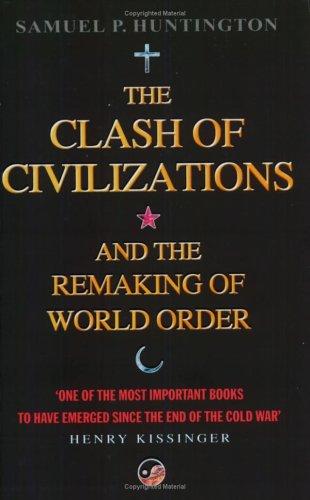
The Clash of Civilizations and the Remaking of World Order
First published 2002 · 521 pages
A sweeping, provocative framework that reshapes how you view the fault lines of global conflict.
What it feels like
Reading this book feels like standing in a geopolitical war room, watching the tectonic plates of human culture slowly but inevitably grind against one another. The pace is steady and methodical, building a massive, heavily documented architecture of theory that demands your full intellectual engagement. The prose is authoritative and detached, yet the atmosphere it creates is deeply sobering, even foreboding, as it maps out the cultural fault lines of the post-Cold War world. It trades the optimism of global unity for a stark, pragmatic vision of enduring tribalism and civilizational friction. This is a must-read for armchair historians and political junkies who crave grand, sweeping theories that challenge conventional wisdom and fundamentally alter how they interpret global events.
- Mood
- sobering
- intellectual
- tense
- foreboding
- Tone
- analytical
- authoritative
- provocative
- detached
- sweeping
- Pace
- steady
- Themes
- global fracture · cultural identity · shifting power dynamics · geopolitical anxiety · historical inevitability
- The writing
- Academic, structured, and heavily documented, yet accessible enough to spark widespread public debate.
- The arc
- Moves from broad intellectual curiosity to a sobering, anxious realization of deep-seated global fractures.
- Who it's for
- Geopolitics enthusiasts and armchair historians fascinated by macro-level theories of international relations.
Content notes
- discussions of war
- ethnic conflict
- political violence
- terrorism
About the book
In the summer of 1993 the journal Foreign Affairs published an article of mine titled "The Clash of Civilizations?". That article, according to the Foreign Affairs editors, stirred up more discussion in three years than any other article they had published since the 1940s. It certainly stirred up more debate in three years than anything else I have written. The responses and comments on it have come from every continent and scores of countries. People were variously impressed, intrigued, outraged, frightened, and perplexed by my argument that the central and most dangerous dimension of the emerging global politics would be conflict between groups from differing civilizations. Whatever else it did, the article struck a nerve in people of every civilization.
Given the interest in, misrepresentation of, and controversy over the article, it seemed desirable for me to explore further the issues it raised. One constructive way of posing a question is to state an hypothesis. The article, which had a generally ignored question mark in its title, was an effort to do that. This book is intended to provide a fuller, deeper, and more thoroughly documented answer to the article's question. I here attempt to elaborate, refine, supplement, and, on occasion, qualify the themes set forth in the article and to develop many ideas and cover many topics not dealt with or touched on only in passing in the article.
Description from Open Library.
Books like The Clash of Civilizations and the Remaking of World Order
See why they match Why the West Rules - For NowIan MorrisA sweeping, God's-eye view of human history that turns millennia of data into a gripping puzzle about geography, power, and our collective future.
 Jihad vs. McWorldBenjamin BarberAn elegant, urgent dissection of the paradoxical forces of global consumerism and tribal fragmentation threatening modern democracy.
 Carnage and cultureVictor Davis HansonA sweeping, accessible synthesis of 2,500 years of military history that examines the cultural roots of Western lethality.
 The End of History and the Last ManFrancis FukuyamaA sweeping, mountaintop view of human civilization that leaves you wrestling with the quiet anxiety of what happens after we win the ideological war.
 21 Lessons for the 21st CenturyYuval Noah HarariA clarifying, panoramic sweep of the modern world's most urgent anxieties, offering a steadying hand in an age of information overload.
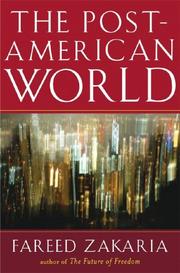 The post-American worldFareed ZakariaA clear-eyed, panoramic view of a rapidly changing globe that replaces anxiety with pragmatic optimism.