Books › The general theory of employment, interest and money

The general theory of employment, interest and money
First published 1936 · 463 pages
A dense, paradigm-shattering intellectual journey that rewrites the rules of how societies manage wealth, work, and crisis.
What it feels like
Reading this foundational text feels like sitting in a dusty Cambridge study, watching a brilliant mind systematically dismantle the old world order. The pace is undeniably steady, demanding patience as you wade through thickets of technical theory, liquidity preferences, and marginal propensities. Yet, the reward for this intellectual heavy lifting is a sudden, clarifying view of the modern economy. The prose is heavily academic but occasionally flashes with the sharp, literary wit characteristic of the Bloomsbury group. It is a deeply serious, paradigm-shifting atmosphere that appeals to the deeply curious policy nerd or history buff. The experience is less about narrative momentum and entirely about the satisfying, tectonic click of a revolutionary framework finally falling into place.
- Mood
- intellectual
- serious
- contemplative
- paradigm-shifting
- Tone
- authoritative
- analytical
- persuasive
- erudite
- revolutionary
- Pace
- steady
- Themes
- systemic change · challenging orthodoxy · economic uncertainty · the mechanics of society
- The writing
- Dense and highly technical, yet punctuated by flashes of brilliant, quotable literary wit.
- The arc
- Moves from a dense, challenging deconstruction of old orthodoxies to the empowering clarity of a new worldview.
- Who it's for
- Deeply curious policy nerds, economics students, and history buffs who want to engage directly with the tectonic shifts of 20th-century thought.
About the book
John Maynard Keynes was born in Cambridge in 1883, son of John Neville Keynes, later registrary of the university; his mother was one of the earliest women students. Educated at Eton and King's, he passed into the Civil Service in 1906, working for three years in the India Office. He returned to Cambridge as a Fellow of King's in 1909 and remained a Fellow until his death. Soon after the outbreak of war in 1914 he was called to the Treasury. Over the next four years his ability and his immense capacity for work took him to the top. By 1919 he was principal Treasury representative at the Peace Conference at Versailles. His passionate disagreement with decisions regarding reparations led to his resignation and the writing of The Economic Consequences of the Peace. From then on, Keynes was a national figure, in the centre of every economic argument and the author of countless 'Keynes Plans' to solve one problem after another. In 1936 he published the most provocative book written by any economist of his generation. The General Theory, as it is known to all economists, cut through all the Gordian knots of pre-Keynesian discussion of the trade cycle and propounded a new approach to the determination of the level of economic activity, the problems of employment and unemployment, the causes of inflation, the strategies of budgetary policy. Arguments about the book continued until his death in 1946 and still continue today. Despite all that has been written in the subsequent quarter of a century, Keynes and his book still represent the turning-point between the old economics and the new from which each generation of economists needs to take its inspiration and its point of departure towards fresh attempts to carry his work further. This new edition provides a complete version of the original text, corrected in the light of subsequent correspondence. It also brings together all of Keynes's prefaces to subsequent foreign translations and prints as appendixes two articles by Keynes, making minor modifications of views set forth in the text.
Description from Open Library.
Books like The general theory of employment, interest and money
See why they match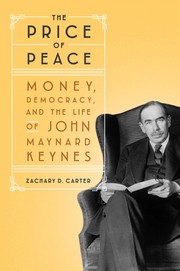 Price of PeaceZachary D. CarterA sweeping, elegant journey through the mind of a bohemian genius who believed economics should serve art, love, and human happiness.
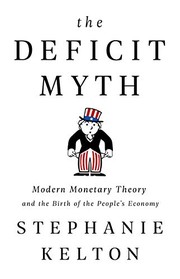 The Deficit MythStephanie KeltonA paradigm-shifting exploration of money that replaces the anxiety of national debt with the radical hope of public investment.
 Le capital au XXIe siècleThomas PikettyA monumental, data-driven reckoning with the historical forces that concentrate wealth and power.
 Principles of Political EconomyJohn Stuart MillA rigorous, foundational exploration of how wealth, trade, and social philosophy intersect in a changing world.
 Money, interest, and pricesDon PatinkinA rigorous, mid-century academic exploration of the fundamental mechanics of money and value.
 The Wealth of NationsAdam SmithA monumental, methodical journey into the philosophical roots of commerce, labor, and human ambition.