Books › The Image of the City

The Image of the City
328 pages
A perspective-shifting lens that transforms the chaotic modern metropolis into a readable, deeply human map of memories and landmarks.
What it feels like
Reading this foundational text feels like putting on a new pair of glasses that suddenly brings the blurry, chaotic metropolis into sharp, meaningful focus. The pace is steady and methodical, guiding you through the psychological landscapes of Boston, Los Angeles, and Jersey City with an observant, deeply thoughtful tone. It immerses you in a contemplative mood, prompting you to mentally walk your own neighborhood and map the nodes, paths, and edges that define your daily life. The prose is clear and accessible, yet tinged with a quiet poetry about how humans connect to their environments. It is a profoundly satisfying read for architects, planners, and any curious pedestrian who wants to understand the invisible architecture of urban memory.
- Mood
- contemplative
- grounded
- intellectually stimulating
- Tone
- analytical
- observant
- thoughtful
- pragmatic
- Pace
- steady
- Themes
- spatial memory · human-environment connection · urban psychology · the subjective experience of place · legibility of space
- The writing
- Clear, methodical, and surprisingly poetic in its descriptions of spatial experience, avoiding overly dense academic jargon.
- The arc
- Moves from a sense of urban disorientation to an empowering, structured understanding of how we navigate and remember our environments.
- Who it's for
- Urbanists, designers, and curious city-dwellers who want to understand why certain streets feel like home and others feel like mazes.
About the book
What does the city's form actually mean to the people who live there? What can the city planner do to make the city's image more vivid and memorable to the city dweller? To answer these questions, Mr. Lynch, supported by studies of Los Angeles, Boston, and Jersey City, formulates a new criterion--imageability--and shows its potential value as a guide for the building and rebuilding of cities. The wide scope of this study leads to an original and vital method for the evaluation of city form. The architect, the planner, and certainly the city dweller will all want to read this book.
Description from Open Library.
Books like The Image of the City
See why they match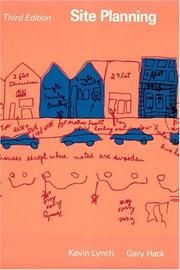 Site PlanningKevin LynchA masterclass in seeing the built environment not just as land and concrete, but as a canvas for human experience.
 Notes on the synthesis of formChristopher AlexanderA deeply analytical and philosophical exploration of how design and aesthetics shape the structures around us.
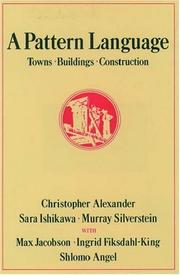 A pattern languageChristopher AlexanderA philosophical and practical field guide to building spaces that feel deeply, fundamentally alive.
 The radiant cityLe CorbusierA dogmatic, visionary manifesto that dreams of replacing chaotic streets with soaring towers of glass, steel, and sunlight.
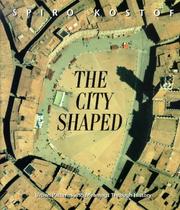 The city shapedSpiro KostofA sweeping, deeply observant journey that transforms the chaotic sprawl of human settlements into a readable, fascinating historical map.
 Human transitJarrett WalkerA clarifying, pragmatic lens that transforms the chaotic noise of city planning into elegant, understandable geometry.