Books › The money bazaar

The money bazaar
228 pages
An eye-opening plunge into the volatile, unregulated, and high-speed world of global currency trading.
What it feels like
Reading this book feels like stepping behind the curtain of the global economy, trading everyday financial confusion for a stark look at the invisible forces that dictate wealth. The narrative moves at a brisk, urgent pace, mirroring the inconceivable speeds of the capital it describes. It cultivates a high-stakes, almost arcane mood as it maps out a decentralized, trillion-dollar-a-week market run by an international circle of traders. The prose is authoritative and revelatory, breaking down complex financial history into accessible, eye-opening insights. It is a perfect fit for readers who want to understand the hidden mechanics of foreign exchange and the unregulated networks that quietly determine the worth of every dollar in their pocket.
- Mood
- high-stakes
- arcane
- volatile
- global
- Tone
- informative
- authoritative
- urgent
- revelatory
- Pace
- brisk
- Themes
- the hidden mechanics of global wealth · unregulated financial power · the speed of modern capital · economic volatility
- The writing
- Clear, explanatory, and urgent, designed to demystify complex financial systems for the layperson.
- The arc
- Moves from a sense of everyday economic bewilderment to a startling realization of the hidden, high-speed forces controlling global wealth.
- Who it's for
- Readers fascinated by global economics, financial history, and the invisible networks that dictate the value of money.
Content notes
- financial anxiety
About the book
A dollar today is worth only about half as many yen as it was a decade ago. And the Japanese, who broke into the American market by selling bargain-priced goods, are now buying up American companies and real estate at bargain-basement prices. What happened? And who's pulling the strings? The answers lie largely in the arcane world of foreign exchange, an arena where a global elite determines the relative values of world currencies--and hence the worth of every country's.
Goods, services, and capital on the world market. In The Money Bazaar, Andrew Krieger explains how money moves at almost inconceivable speeds, piercing national borders with near impunity, and affecting the worth of every coin and dollar in your pocket. He offers an eye-opening tour of an extraordinarily volatile, unregulated, and immensely profitable market. It is a market composed of an international circle of traders who command huge amounts of capital, cut deals.
Between themselves, and benefit from the ups and downs of the world's currencies. Krieger revisits the history of foreign exchange, which was a financial backwater until the United States went off the gold standard in 1971, and tells why central bankers and finance ministers have had so much trouble controlling it. Today, the foreign-exchange market is made up of a vast international network of individuals, bound to one another by computer screens and telephone links.
There is no trading floor, no centralized clearinghouse, and no governing body in this trillion-dollar-a-week market. The market exists only to the extent that traders in New York and Singapore, Bahrain and Geneva, London and Tokyo are willing to buy and sell among themselves. To trade on this market is to be a citizen of the world, with interests and opportunities and contacts at virtually every point of the planet. In The Money Bazaar, Krieger describes how currency.
Trading works today, its ubiquitous effect on consumers and corporations alike. He illustrates his absorbing tale with anecdotes and strategies and tactics from his own remarkable trading career.
Description from Open Library.
Books like The money bazaar
See why they match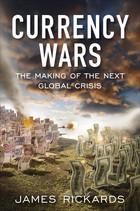 Currency warsJames RickardsAn urgent, high-stakes exploration of the hidden financial battles threatening the stability of the global economy.
 The little book of currency tradingKathy LienA pragmatic and accessible guide that demystifies the mechanics of global currency markets.
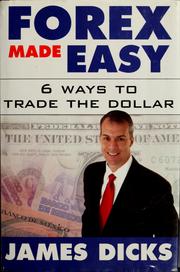 Forex made easyJames DicksAn empowering, no-nonsense roadmap that transforms the intimidating world of currency trading into an accessible strategy for the everyday investor.
 Trading placesClyde V. PrestowitzA fascinating time capsule of 1980s geopolitical anxiety that reads like an urgent briefing from the front lines of global trade.
 Changing fortunesPaul A. VolckerAn authoritative, dual-perspective journey through fifty years of global economic upheaval, told by the statesmen who navigated the storms.
 Adaptive marketsAndrew W. LoA fascinating, interdisciplinary deep dive into the biological and psychological forces that actually drive the stock market.