Books › The sports gene
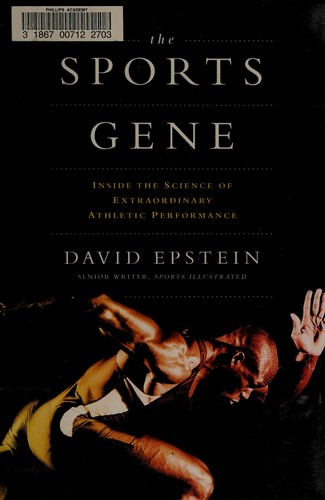
The sports gene
338 pages
A fascinating, globe-trotting investigation into the biological blueprints of human greatness.
What it feels like
Reading this book feels like sitting down with a brilliant, endlessly curious sports journalist who is determined to dismantle everything you thought you knew about talent. The pace is brisk, carrying you from remote Kenyan running camps to high-tech genetic laboratories without ever getting bogged down in dense academic jargon. It cultivates a mood of intellectual awe, replacing the simplistic ten-thousand-hour rule with a much richer, more complex tapestry of human biology and environmental luck. The prose is sharp, accessible, and deeply empathetic to the athletes whose bodies are under the microscope. It is a perfect read for anyone who loves Malcolm Gladwell but craves a bit more scientific rigor, offering a deeply satisfying exploration of what it truly means to be a natural.
- Mood
- intellectually stimulating
- curious
- awe-inspiring
- Tone
- inquisitive
- engaging
- analytical
- accessible
- objective
- Pace
- brisk
- Themes
- the nature vs. nurture debate · human potential · the myth of the self-made athlete · biological destiny · intersection of science and culture
- The writing
- Clear, journalistic, and narrative-driven, translating complex genetic science into compelling human stories.
- The arc
- Moves from a sense of wonder at superhuman feats to a grounded, nuanced appreciation of the complex interplay between our bodies and our environments.
- Who it's for
- Curious minds, sports fans, and pop-science enthusiasts who love dismantling conventional wisdom to understand what makes outliers tick.
Content notes
- medical anomalies
- animal testing mentions
About the book
This book explores the roles of both genetics and training in athletic success, arguing that both are equally necessary components of athletic achievement while considering such topics as race, gender, and genetic testing.We all knew a star athlete in high school. The one who made it look so easy. He was the starting quarterback and shortstop; she was the all-state point guard and high-jumper. Naturals. Or were they? The debate is as old as physical competition. Are stars like Usain Bolt, Michael Phelps, and Serena Williams genetic freaks put on Earth to dominate their respective sports? Or are they simply normal people who overcame their biological limits through sheer force of will and obsessive training? The truth is far messier than a simple dichotomy between nature and nurture. In the decade since the sequencing of the human genome, researchers have slowly begun to uncover how the relationship between biological endowments and a competitor's training environment affects athleticism. Sports scientists have gradually entered the era of modern genetic research. In this exploration of athletic success, the author, a senior writer at Sports Illustrated magazine tackles the great nature vs. nurture debate and traces how far science has come in solving this great riddle. He investigates the so-called 10,000-hour rule to uncover whether rigorous and consistent practice from a young age is the only route to athletic excellence. Along the way, he dispels many of our perceptions about why top athletes excel. He shows why some skills that we assume are innate, like the bullet-fast reactions of a baseball or cricket batter, are not, and why other characteristics that we assume are entirely voluntary, like an athlete's will to train, might in fact have important genetic components. Through on-the-ground reporting from below the equator and above the Arctic Circle, revealing conversations with leading scientists and Olympic champions, and interviews with athletes who have rare genetic mutations or physical traits, the author forces us to rethink the very nature of athleticism.
Description from Open Library.
Books like The sports gene
See why they match RangeDavid EpsteinA validating and intellectually thrilling defense of the late bloomer, the dabbler, and the jack-of-all-trades.
 What doesn't kill usScott CarneyAn invigorating exploration of how pushing our physical limits can unlock the hidden resilience of our evolutionary past.
 She Has Her Mother’s LaughCarl ZimmerA sweeping, deeply human exploration of the invisible threads that connect us to our ancestors, our descendants, and the world around us.
 ExercisedDaniel LiebermanA liberating, science-backed exploration that replaces gym guilt with a fascinating evolutionary understanding of how our bodies are meant to move.
 Who we are and how we got hereDavid Reich (Of Harvard Medical School)A sweeping, science-driven journey through deep time that rewrites the story of human ancestry and interconnectedness.
 OutliersMalcolm GladwellAn engaging journey that dismantles the myth of the self-made genius to reveal the hidden forces behind extraordinary success.