Books › Capitalism
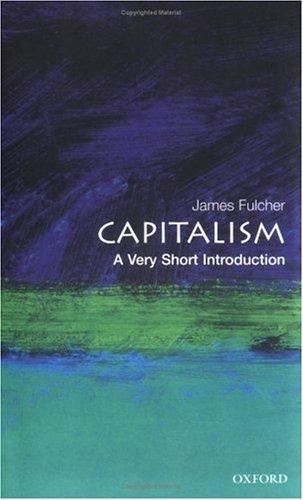
Capitalism
A Very Short Introduction
First published 2004 · 239 pages
A concise, globe-trotting exploration of the economic engine that drives the modern world and the alternatives that challenge it.
What it feels like
Reading this book feels like taking a brisk, illuminating walking tour through the architecture of modern society. It offers a grounded, intellectual atmosphere where complex global systems are distilled into clear, accessible insights. The narrative moves steadily across centuries and continents, shifting from the feverish speculation of seventeenth-century tulip markets to the sobering realities of modern financial crises. The prose is analytical and concise, designed to clarify rather than overwhelm, making dense economic history feel approachable. It builds a contemplative arc, guiding the reader from historical curiosity toward a thoughtful questioning of what the future might hold. This is a deeply satisfying read for curious minds eager to understand the invisible forces shaping our world without getting bogged down in academic jargon.
- Mood
- intellectual
- contemplative
- grounded
- inquisitive
- Tone
- informative
- analytical
- objective
- accessible
- Pace
- brisk
- Themes
- economic history · global systems · societal structures · the search for alternatives
- The writing
- Clear, concise, and structured to distill complex global phenomena into digestible case studies.
- The arc
- Moves from historical curiosity through analytical understanding to a contemplative look at future possibilities.
- Who it's for
- Curious minds seeking a foundational, objective understanding of the economic systems that shape our modern world.
Content notes
- economic instability
- financial crises
About the book
The word ‘capitalism’ is heard and used frequently, but what is capitalism about, and what does it mean? Capitalism: A Very Short Introduction discusses the history and development of capitalism through several detailed case studies, ranging from the ‘tulipomania’ of 17th-century Holland, the Great Depression of the 1930s, and the impact of the global financial crisis that started in 2007–8. It looks at the different forms that capitalism takes in Britain, Japan, Sweden, and the United States, and explores whether capitalism has escaped the nation-state by going global. It asks whether there is an alternative to capitalism, discussing socialism, communal and cooperative experiments, and the alternatives proposed by environmentalists.
Description from Open Library.
Books like Capitalism
See why they match PostCapitalismPaul MasonAn urgent, visionary roadmap for building a more just society from the ashes of a failing economic system.
 Global economic historyRobert C. AllenA sweeping, efficient distillation of five centuries of global wealth, poverty, and the policies that divided the world.
 Capitalist RealismMark FisherA sharp, claustrophobic diagnosis of the modern condition that articulates the exact shape of your everyday exhaustion.
 Talking to My Daughter About the EconomyYanis VaroufakisAn intimate, jargon-free masterclass that demystifies the invisible economic forces shaping our world.
 Basic economicsThomas SowellA masterclass in stripping away political rhetoric to reveal the hidden, often counterintuitive gears that drive human societies.
 23 things they don't tell you about capitalismHa-Joon ChangA sharp, accessible myth-busting journey that pulls back the curtain on the invisible rules governing our economic lives.